
Why Comedy?
Many young people facing adversity struggle to access support that feels safe, engaging, and relevant to their experiences.
Traditional psychosocial services can be helpful, but some youth may find clinical environments intimidating, unfamiliar, or difficult to engage with — particularly when trust, confidence, or social connection have been disrupted by adversity.
As a result, many young people who could benefit from support remain disconnected from available resources.
HaHaHelps was created to help bridge this gap by introducing a relationship-based approach to psychosocial and socioemotional development through shared laughter, creativity, and play.
The Problem
Why Comedy Works
Humour and play are powerful tools for human connection. Laughter lowers social barriers, builds trust within groups, and allows young people to explore difficult emotions in ways that feel safe and engaging.
Recent research in psychology and youth development shows that humour, play, and social connection can support emotional regulation, resilience, and a sense of belonging.
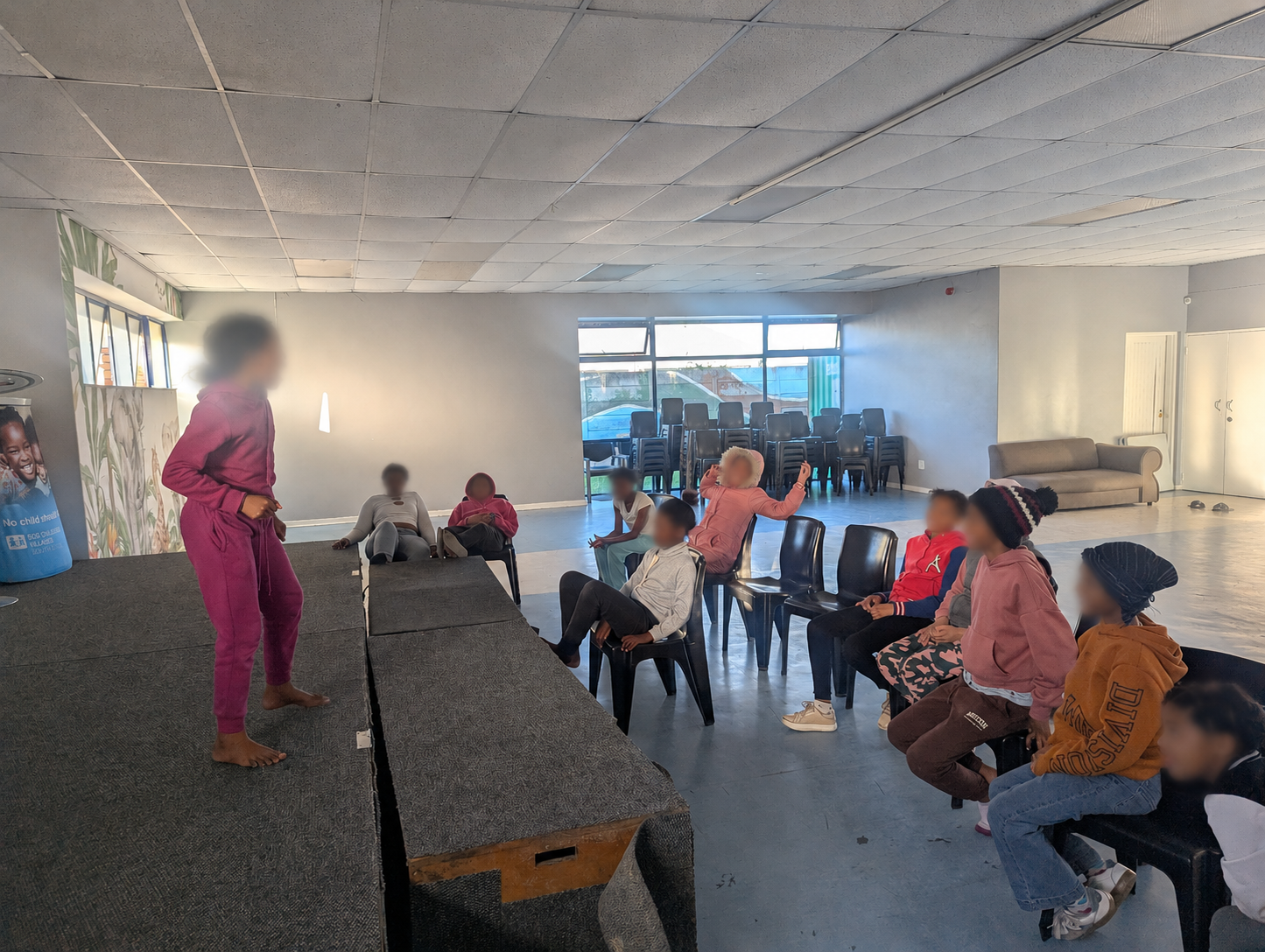
One form of structured play that lends itself particularly well to this kind of learning is improvisational comedy, often called improv — a style of theatre where participants create scenes together in the moment rather than following a script. By building on unexpected ideas and responding to one another spontaneously, participants often generate laughter while strengthening collaboration and shared connection.
Through this playful interaction, young people practise communication, perspective-taking, and creative problem-solving in real time.
For youth facing adversity, these experiences can create moments of relief, connection, and confidence — helping them discover new ways of relating to themselves and to others.
The Promise
HaHaHelps is more than an improv workshop. It is a trauma-sensitive, strengths-based psychosocial programme model that uses structured improvisational comedy to intentionally build confidence, socioemotional development, and peer connection.
In HaHaHelps, guided improv exercises are intentionally designed around psychosocial goals such as:
• confidence and self-expression
• perspective-taking and empathy
• managing mistakes and uncertainty
• speaking up and collaborating with others
These exercises encourage playful collaboration and unexpected ideas, often with the goal of eliciting laughter while strengthening trust and connection within the group.
Youth practise listening, adapting, supporting one another, and recovering from missteps in real time within a playful and supportive group environment — an approach aligned with research showing that play, humour, and social connection are powerful pathways for building emotional regulation and resilience.
Through repeated participation, youth build confidence, strengthen communication skills, and develop practical strategies for navigating challenges with their peers.
HaHaHelps creates an accessible entry point into psychosocial support for young people who may not engage with traditional services.
Early Impact: SOS Children’s Villages Cape Town, 2024–2025
Confidence & Voice ↑
+2 point increase, on a 5-point scale, in youth feeling heard and able to express themselves after four sessions.
Belonging & Peer Connection ↑
Participants reported stronger friendships, collaboration, and willingness to take positive social risks.
Engagement & Participation ↑
63 youth reached across five programme cycles with consistently high session ratings.
HaHaHelps is now undergoing formal evaluation through master’s research in psychology at the University of Cape Town.